
Chennai-based startup SpeakLingo is building around a premise that feels increasingly hard to ignore: people think faster than they type, and digital work should not slow down because the keyboard cannot keep up.
Founded in 2025 by Prasanth Kumar, the company is positioning itself at the intersection of voice, productivity, and AI-driven workflow design. Its core thesis is simple. For decades, typing has been treated as the default bridge between human intent and digital execution. SpeakLingo is betting that this default is starting to break.
For students, professionals, founders, writers, and knowledge workers, the cost of typing is not just time. It is an interruption. A thought forms quickly, but by the time it is typed out, momentum drops. The flow breaks. What feels clear in the mind becomes slower and smaller on the screen. In that sense, SpeakLingo is not merely targeting a convenience problem. It is targeting friction embedded in everyday computer use.
That explains why the company does not want to be seen as just another voice typing or transcription tool.
SpeakLingo is being built as a voice-first productivity platform for PC users, with the aim of turning spoken input into more than plain text. Its broader goal is to help users convert speech into prompts, tasks, writing, commands, and structured action. The company’s ambition is not simply to make typing easier, but to reduce how often typing is needed in the first place.
That is where its phrase, AI behind the cursor, becomes central.
For SpeakLingo, this is not just a marketing line. It is the product philosophy. The company wants intelligence to sit closer to where work actually happens inside the PC workflow itself. Instead of treating voice as a disconnected dictation layer, SpeakLingo is being designed to help users move from spoken intent to usable execution without constantly switching context, retyping, or losing speed. The idea is to make speech feel less like an accessory and more like an active layer of work.
The startup has also introduced its own term for this shift: Syping. In SpeakLingo’s framing, Syping goes beyond traditional dictation. It refers to a more active and intelligent way of working on the PC, where voice can help users write, trigger shortcuts, shape output, and continue their workflow with less interruption. The term reflects the company’s attempt to define voice not as a passive input method, but as a serious productivity interface. More about this can be found here: https://speaklingo.ai/syping
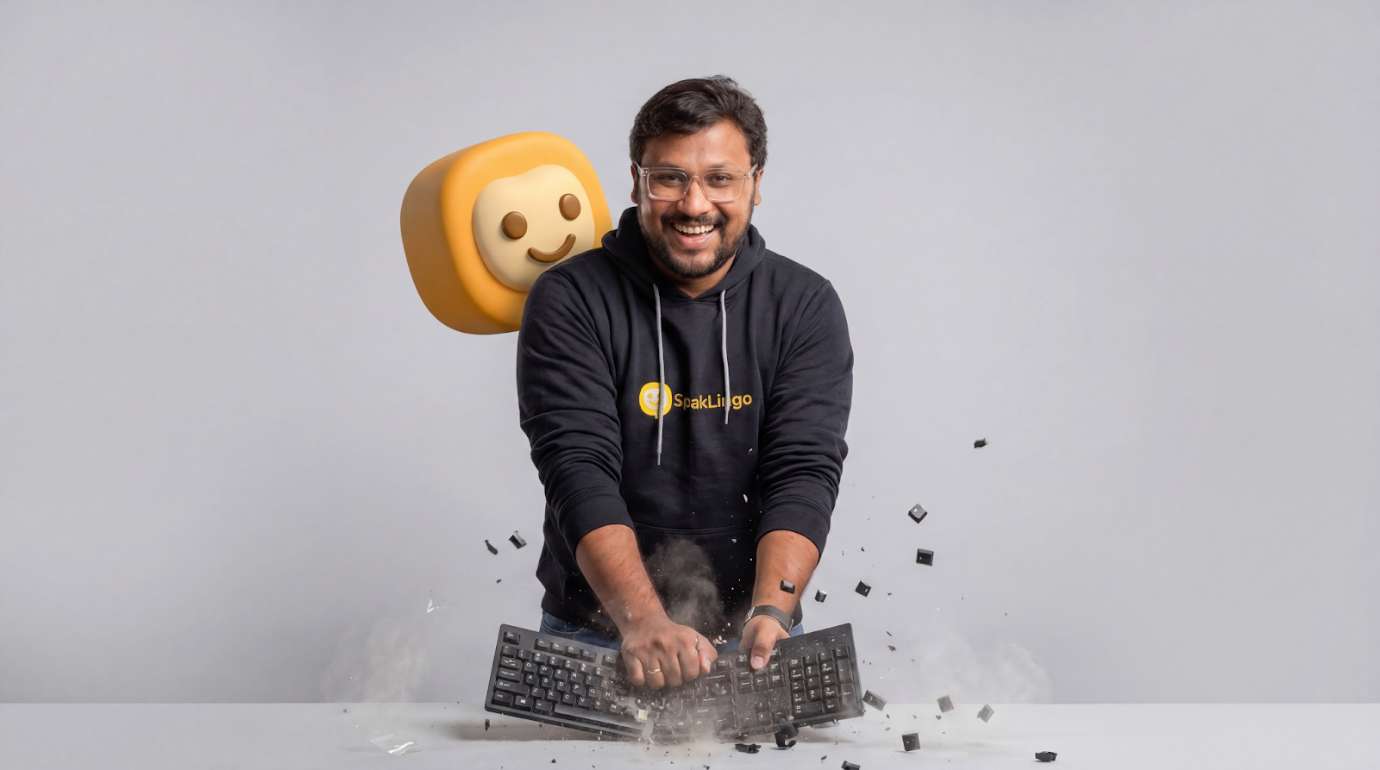
That product direction sits inside a larger and more provocative mission: killing the keyboard.
To be clear, SpeakLingo is not arguing that keyboards will disappear overnight. Its claim is more strategic than literal. The company believes the keyboard should no longer be treated as the only serious interface for getting digital work done. Its founder’s rationale for that belief is outlined in Why We Decided to Kill the Keyboard, where the company explains why conventional dictation products never went far enough and why it sees a wider opportunity in redesigning workflow around voice: https://speaklingo.ai/blog/why-we-decided-to-kill-the-keyboard
The timing of that argument matters. As AI systems normalize natural-language interaction, software is increasingly being evaluated not only on capability, but on interface design. Users are becoming more comfortable expressing intent in plain language. That shift creates room for new operating models, especially on the PC, where much of work still depends on fragmented applications, manual typing, and repeated context-switching.
SpeakLingo’s bet is that voice will not remain a secondary convenience inside this transition. It could become a primary productivity layer.
That is an ambitious claim, particularly in a category where many tools are still perceived as incremental dictation products rather than serious workflow platforms. But ambition is exactly what gives the company its edge. Kumar has built the brand around a clear point of view: the distance between thought and execution is still too large, and voice, paired with workflow intelligence, can help close it.
For an early-stage startup, clarity of positioning often matters as much as product breadth. On that front, SpeakLingo has chosen a direction that is unusually sharp. It wants to be remembered for two connected ideas: reducing dependence on keyboards and bringing AI closer to the moment of action.
If that vision resonates, SpeakLingo may be building around more than a niche feature set. It may be positioning itself around a broader behavioral shift, one in which speaking becomes less of an alternative input method and more of a serious way to work.
Tags:
voice first productivity
speech to action
keyboard replacement
AI productivity app
voice typing for PC
